
If you don’t believe me when I say podcasts were a lifesaver during my didactic year, just check my Spotify Wrapped for 2024 😂…

Podcasts are a fantastic addition to your study rotation because they allow for active learning and review, whether you’re commuting to class, working out, or even cleaning your house. Personally, I loved to listen to podcasts on my morning drive to prepare for the day’s lectures or on my way home to solidify the topics we discussed that day in class. Below, I’ll share my favorite podcasts that kept me on track during my PA journey and why I think they’re worth your time.
Podcast Recommendations
more or less in order of most to least helpful
- Cram the PANCE
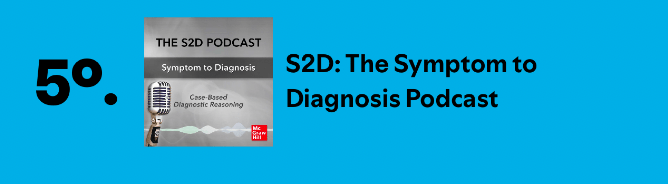
- Symptoms to Diagnosis
- Run the List
- Med Bullets
- The Curbsiders Internal Medicine Podcast
- Dr. Matt and Dr. Mike’s Medical Podcast
- Ninja Nerd
- Physician Assistant Exam Review
- Physician Assistant in a Flash
- Medgeeks: Exam Review Medicine
Why I Recommend Each Podcast
1. Cram the PANCE
Hosted by Scott Shapiro, PA-C, this podcast takes the lead because it condenses high yield topics from the PANCE blueprint. Scott includes memorable acronyms and mnemonics to help you remember “key terms” for exams, some of which he brings to life with storytelling- visual learners, check out his Youtube channel! In addition, most episodes end with 5 review questions to summarize key takeaways. He also has 50-question review episodes for certain units, which are perfect for exam prep. Most episodes are under 60 minutes, but some can be a bit longer.
2. Symptoms to Diagnosis
I highly recommend this podcast, based on the book of the same name, to enhance critical thinking and differential diagnosis skills. The case-based format involves one doctor presenting a case in chunks while the other is “pimped” and must ask questions to obtain more information. I like how the information isn’t presented all at once, forcing you to keep a wide differential as you would in a real encounter. Also, they provide “clinical pearls” from their experience and “pet peeves” to help guide new learners. Episodes are organized by chief complaints like “Headache” and “Rash” and are typically under 30 minutes—ideal for commutes.
3. Run the List
Similar to Symptoms to Diagnosis, this podcast presents cases by chief complaints, but is set apart by the wider range of episodes and expert guest speakers. Topics include approach to problem-solving, health disparities, procedural skills, and advice for specialty careers. The concise episodes (20-30 minutes) are perfect for quick reviews or learning new approaches to patient care.
4. Med Bullets (Step 1, Steps 2 & 3)
Even though this podcast is geared towards medical students it has great value for all medical learners. Episodes are categorized by specialty or foundational sciences like microbiology and pharmacology and begin with a short case and multiple-choice questions. I found these best for when I wanted to learn more about common signs and symptoms of a specific disease. Also, the concise explanations for the correct and incorrect answers to the MCQs gave me more practice prior to exams. Most episodes are under 10 minutes.
5. The Curbsiders Internal Medicine Podcast
This conversational podcast hosts a wide range of healthcare professionals from nutritionists and therapists to subspecialty physicians to discuss diagnosis, management of complicated diseases, insights on pharmacology, behavioral interventions, current events in medicine, guideline updates (ex. USPSTF), and more. Though episodes are lengthy (over an hour) you can usually skip the first 10-15 minutes of conversation and listen while working out or on a long drive.
6. Dr. Matt and Dr. Mike’s Medical Podcast
These Australian doctors bring charm, humor, and depth to pathophysiology, making it engaging for all learners. Their episode on ischemic heart disease was particularly enlightening. At over an hour each, these episodes are great for when you want something to listen to while multitasking.
7. Ninja Nerd
While better known for their YouTube videos, Ninja Nerd has a podcast as well. I prefer their videos because they draw detailed diagrams and pictures on a white board to help you better understand the topics. I found it ideal for when I needed a foundational understanding of pathophysiology. Caution: since the target audience is medical students, sometimes the depth of information is too specific for PA learners. Most episodes are over an hour, but I would recommend sitting down and taking notes while watching/listening.
8. Physician Assistant Exam Review
Brian Wallace, PA-C, keeps this podcast aligned with the PANCE blueprint, making it ideal for early PA students. Each episode opens with focus questions and concludes with answers, and the compact format (20-30 minutes) is perfect for a quick dose of learning on the go. I stopped listening to this a couple months into school because he does a lot of self-promotion and my other resources helped more, however, I did come back to it later in the year for certain topics that weren’t included on the other podcasts.
9. Physician Assistant in a Flash
This unique flashcard style podcast is tailored for those who already KNOW the material and need a focused review. I would do these on occasion prior to exams but at times I felt like they could be overwhelming since a lot of topics included were not what I needed to review for my specific exams.
10. Medgeeks: Exam Review Medicine
Though I only listened to a few episodes, this podcast touches on similar themes to those mentioned above and is worth exploring if you’re looking to fill in gaps in your knowledge. The episode that helped me most was how to perform a neuro exam because of the succint and methodical approach.
Bonus Recommendation
- Noted Anatomist (YouTube): While not a podcast, this channel provides exceptional anatomy content as a supplement to lecture and textbook material. Just be cautious of the overwhelming detail and stick to your specific structure list.
Final Thoughts
Podcasts are a versatile learning tool that can transform your PA school experience. Whether you’re commuting, working out, or cleaning, there’s always an opportunity to learn. By integrating podcasts into your study routine, you can reinforce your knowledge, stay ahead in class, and ultimately prepare yourself for didactic year exams, clinical rotations, and the PANCE. Happy listening!
 Health and Home by Haven
Leave a comment